Why LeStallion Notebooks for Journaling Can Transform Your Daily Writing Habit
I have kept a journal on and off for the better part of fifteen years. Some stretches were disciplined, with daily entries and careful handwriting. Others were sparse, with months of blank pages that reminded me of a promise I kept breaking to myself. The problem was never a lack of things to say. It was that my notebook never felt like something I wanted to open.
That changed when I started using LeStallion notebooks for journaling. The difference was not instant. It took a few weeks of testing to understand why this particular notebook seemed to pull me back to the page when others had let me drift away. The reasons have less to do with hype and more to do with design choices that respect how real people actually write.
What Makes a Notebook Feel Right for Daily Use
Most notebooks are made for one audience: the mass market. They have standard paper, standard covers, standard bindings. They work fine for grocery lists or meeting notes. But journaling is different. It asks for a private space that feels personal. The paper needs to take ink without bleeding through to the next page. The binding needs to lie flat so you can write near the spine without fighting the book. The cover should feel good in your hand, not slippery or stiff.
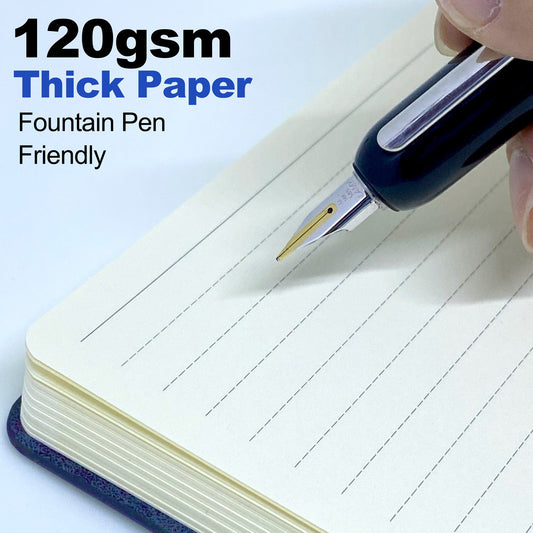
LeStallion notebooks for journaling address these details in ways that show someone actually tested them with real pens. The paper is thick enough for fountain pens, which is rare. Most brands either use thin paper that feathers or they charge luxury prices for something that still buckles under wet ink. Here the balance works. The pages stay smooth, the ink dries quickly, and the ghosting is minimal even with a wet nib.
The Physical Experience Matters More Than You Think
When I write by hand, the feel of the pen against the paper affects what I write. A scratchy surface makes me rush. A slippery surface makes my letters sloppy. The paper in these notebooks has a slight tooth, enough to give the pen some grip without dragging. It sounds like a small thing, but after a few pages you notice that your handwriting looks better and your hand tires less.
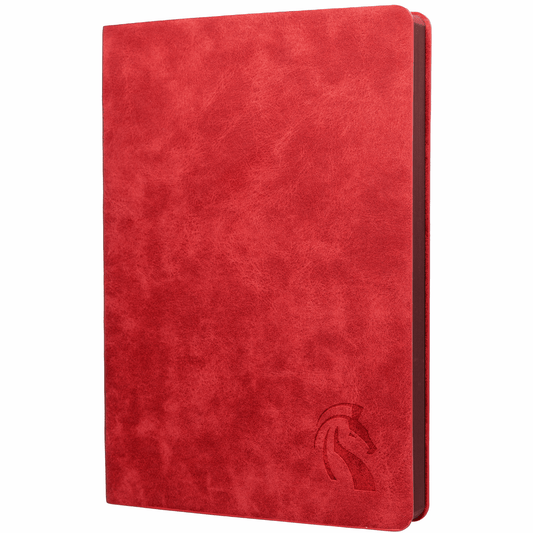
The binding is another area where many notebooks fail. They use glue that cracks after a few months, or they use spiral wire that catches on your sleeve. LeStallion uses a sewn binding that allows the notebook to open fully flat. That matters more than it sounds. When you write near the inner margin of a bound book, you usually have to press the spine down with one hand while writing with the other. With a flat-lay binding, both hands are free, and the pages stay put. That makes long journal sessions feel less awkward.
How the Design Encourages Consistency
Consistency is the hardest part of journaling. The first week is easy. The second week is harder. By the third week, most people have stopped. I have seen this pattern in myself and in dozens of friends who started journals with good intentions.
The trick is to remove friction. If the notebook is not where you can see it, you forget to write. If the pages feel precious, you hesitate to fill them. If the pen bleeds through, you get annoyed and stop. LeStallion notebooks for journaling handle the friction points so you can focus on the writing itself. The cover is sturdy enough to carry in a bag without a separate sleeve. The pages are numbered, which sounds trivial until you realize that numbered pages make it easier to find old entries and track your progress. The ribbon bookmark stays in place better than the cheap fabric markers that slip out after a few days.
I have started keeping mine on my nightstand with a pen clipped to the cover. That simple habit, plus the fact that the notebook feels good to pick up, has kept me writing every night for the past four months. That is longer than any streak I have ever managed.
Paper Quality and Ink Performance
Let me talk about paper because it is the part most people overlook until they have a bad experience. The paper in these notebooks is 100 gsm, which is heavier than the 80 gsm found in most standard notebooks. The extra weight means less show-through and less bleed-through. I tested it with a Pilot Metropolitan fountain pen with a fine nib and Noodler's ink, which is a wet combination. The ink sat on top of the paper, dried in about ten seconds, and showed only a faint shadow on the reverse side. A ballpoint or gel pen performed even better.
If you use highlighters, the paper handles them without bleeding or feathering. That is useful if you like to color-code your entries or mark passages for later reference. I use a mildliner on some pages, and the paper does not buckle.
Practical Trade-Offs to Consider
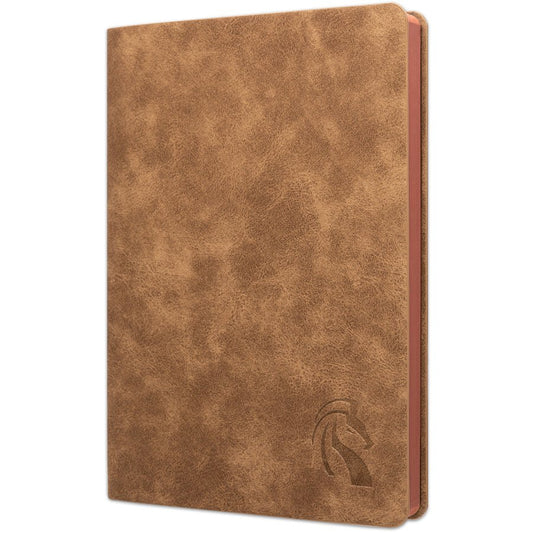
No notebook is perfect for everyone, and I want to be honest about the trade-offs. The LeStallion notebook is not the cheapest option on the market. You can find notebooks for half the price, but they will use thinner paper and glued bindings that may not last. If you write lightly with a ballpoint pen and only fill a few pages a month, the cheaper option might be fine. But if you write every day, use fountain pens, or want the notebook to survive a year of regular use, the extra cost is worth it.
The other trade-off is size. The A5 size is my favorite because it fits in most bags and gives enough space for a full page of writing. But if you prefer a larger page for drawing or a smaller one for pocket carry, you may want to check the available sizes before buying. The brand offers a few options, so you are not stuck with one size.
The page count is 192 pages, which lasts me about three months of daily writing. That is a good length. Short enough that you finish the notebook and feel a sense of accomplishment, long enough that you build a real habit before you need to buy another.
How to Start a Journaling Habit with This Notebook
If you are new to journaling or trying again after a failed attempt, here is what I recommend:
- Keep the notebook in one visible place for the first two weeks. Do not move it around. Your brain needs to associate the location with the act of writing.
- Write for five minutes, not thirty. Short sessions are easier to sustain, and you can always write longer if you feel like it.
- Do not worry about writing something profound. Complain about your day, list what you ate, describe the weather. The act of writing is more important than the content.
- Use the same pen every time. That removes one more decision and makes the routine automatic.
- If you miss a day, do not try to catch up. Just write on the next blank page. Catching up creates guilt, and guilt kills habits.
These steps are simple, but they work because they respect how habits actually form. The notebook supports them by being a pleasant object to use, not a hurdle to overcome.
Final Thoughts on Making Journaling Stick
I have tried many notebooks over the years. Some were beautiful but impractical. Some were practical but ugly. Some were both ugly and impractical, and I still wonder why I bought them. LeStallion notebooks for journaling hit the sweet spot where thoughtful design meets real-world use. They do not promise to make you a better writer or a more organized person. They just give you a tool that does not get in the way.
That is more valuable than it sounds. When a tool disappears into the background, you can focus on the work itself. The work here is your own thoughts, your own record of days, your own practice of reflection. A good notebook helps you do that work more often and with less friction. That is why I keep reaching for mine.